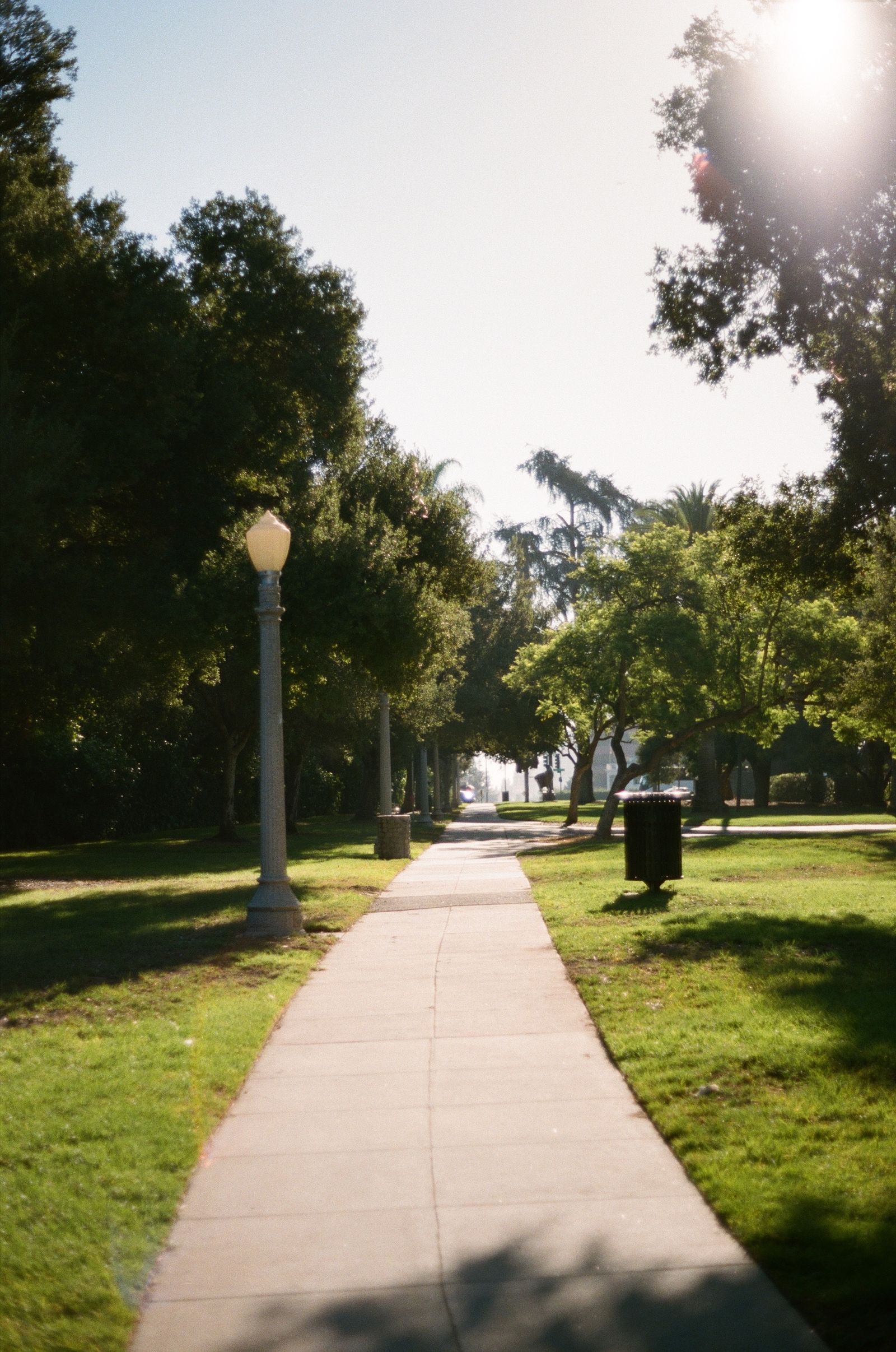
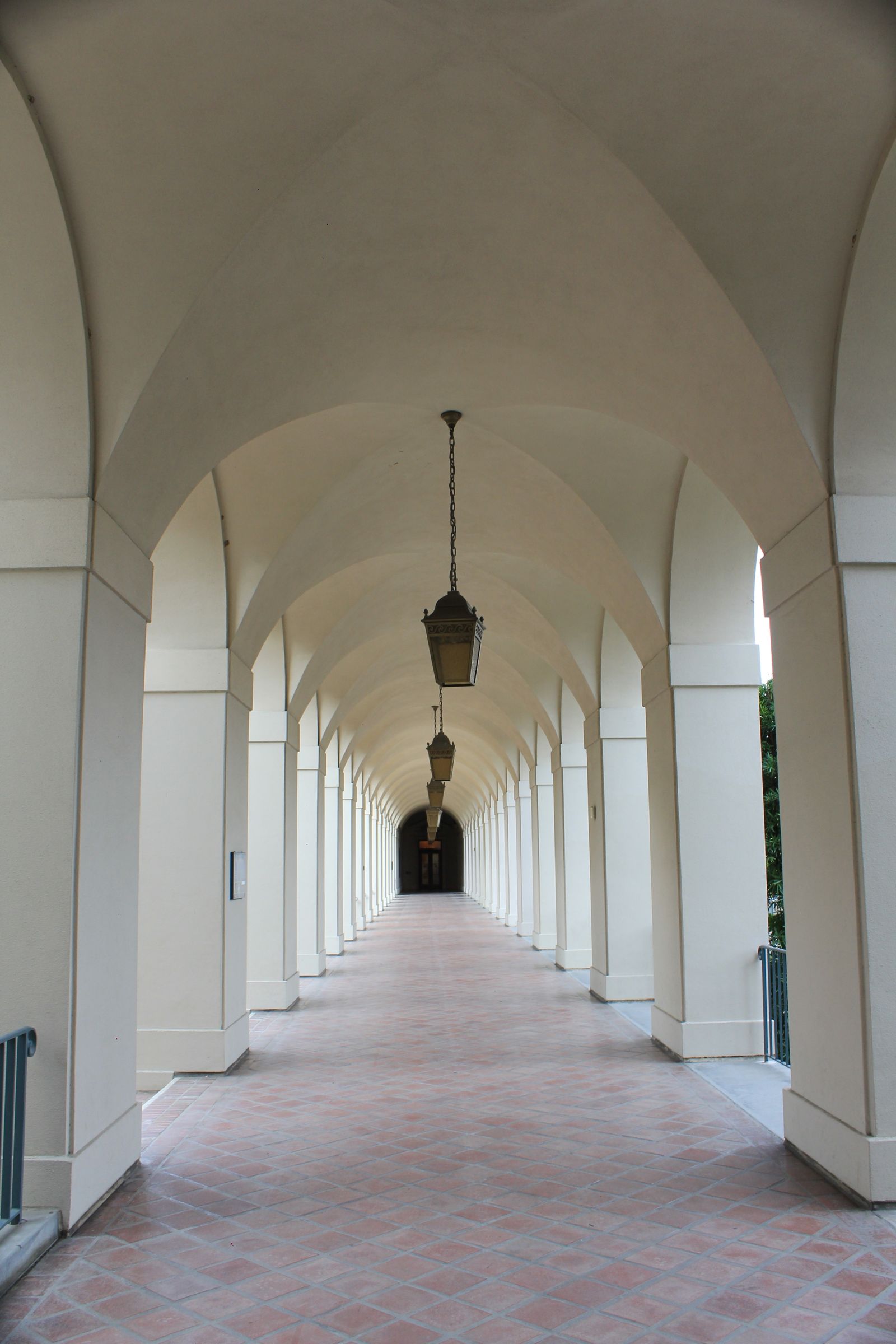
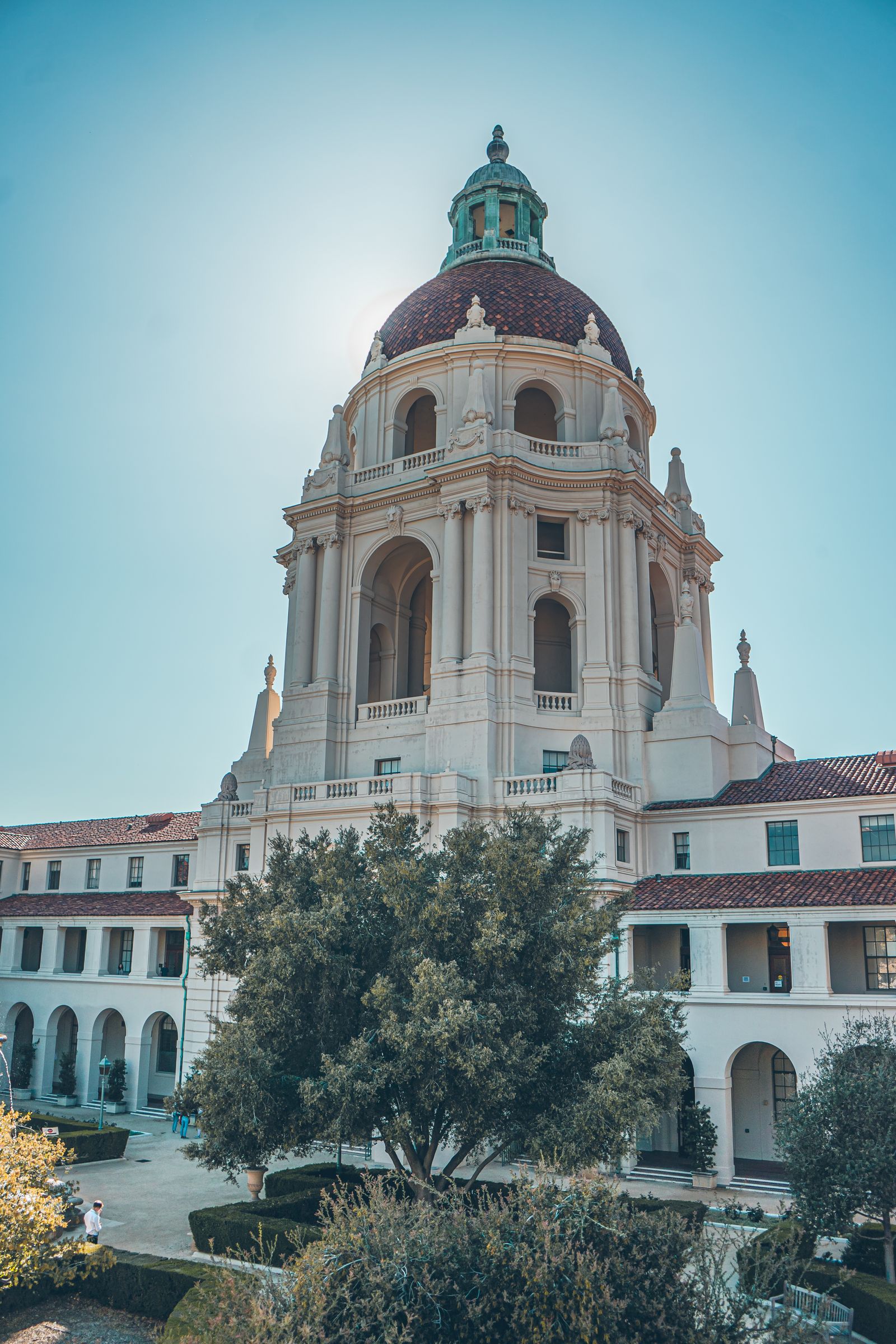
Pasadena City Hall's 1927 dome and courtyard in Pasadena, California
Crown City history

The History of Pasadena, California

How a colony of Indiana farmers on the edge of the Arroyo Seco became the City of Roses — the boom hotels, the mountain railway, the stadium, the science, the landmarks we lost, and the ones you can still walk into today.

Founded
1874 (Indiana Colony)
Incorporated
June 19, 1886
Name means
"Crown of the Valley"
First Rose Parade
January 1, 1890
Rose Bowl opened
1922
Caltech founded as
Throop, 1891
Timeline

Eight eras that made Pasadena

From Tongva village sites to Mars rovers — the turning points, in order.

Before 1770

Hahamog'na land at the mouth of the Arroyo

Long before there was a Pasadena, the land between the Arroyo Seco and the San Gabriel foothills was home to the Hahamog'na, a band of the Tongva (Gabrielino) people. They lived along the year-round water of the arroyo and the canyons that drain the mountains — the same water that would later decide where every road, orchard and reservoir in the city went. The name survives today in Hahamongna Watershed Park, just below Devil's Gate Dam.

  • The Arroyo Seco — "dry stream" in Spanish — is still the city's defining natural feature
  • Tongva place names and trail routes shaped the earliest wagon roads into the valley
1771–1873

Mission lands, then Rancho San Pascual

After the founding of Mission San Gabriel in 1771, the area became mission grazing land. Following Mexican independence and the secularization of the missions, the land passed into private hands as Rancho San Pascual — roughly 14,000 acres covering what is now Pasadena, South Pasadena and Altadena. A string of owners ran cattle and sheep here through droughts that eventually broke the ranching economy and put the land on the market in pieces.

  • Rancho San Pascual covered today's Pasadena, Altadena and South Pasadena
  • Devastating 1860s droughts collapsed Southern California ranching and freed the land for subdivision
1874–1885

The Indiana Colony plants a town

In 1873 a group of Indianapolis families — chasing a warmer climate and a healthier one — sent Daniel M. Berry west to find land. He found the west end of Rancho San Pascual. The buyers organized as the San Gabriel Orange Grove Association, and settlers arrived in 1874 to what everyone simply called the Indiana Colony. Two years later they wanted a real name and landed on Pasadena, taken from an Ojibwe phrase understood locally as "crown of the valley." Citrus went in the ground, irrigation ditches followed, and a farming village took shape around what is now Orange Grove Boulevard.

  • Settlers arrived in 1874; the name Pasadena was adopted the following year
  • "Crown of the Valley" is still the city's nickname and the reason locals say "Crown City"
  • Orange Grove Boulevard was lined with so many mansions it earned the name Millionaires' Row
1886–1899

Railroads, resort hotels and the first Rose Parade

The Santa Fe reached Pasadena in the mid-1880s and set off one of the wildest land booms in American history. Pasadena incorporated as a city on June 19, 1886. Wealthy Easterners came for the winter and needed somewhere to stay, so the town built palace hotels: the Raymond on its own hill, the Hotel Green downtown, the Hotel Maryland with its famous vine-covered pergola. To show off the weather to people shoveling snow back home, the Valley Hunt Club staged a flower-covered carriage parade on January 1, 1890 — the first Tournament of Roses.

  • Pasadena incorporated June 19, 1886
  • First Rose Parade: January 1, 1890, organized by the Valley Hunt Club
  • Thaddeus Lowe's Mount Lowe Railway opened in 1893, carrying tourists to a mountaintop resort
1900–1929

Craftsman houses, a stadium, and a new kind of college

The boom turned into real civic wealth. Charles and Henry Greene built the redwood-and-shingle houses that made the American Craftsman bungalow famous, with the 1908 Gamble House as its masterpiece. The Colorado Street Bridge arched across the Arroyo Seco in 1913. Football moved out of Tournament Park into a horseshoe stadium in the arroyo — the Rose Bowl — which opened in 1922. Throop Polytechnic Institute, founded in 1891, was rebuilt under George Ellery Hale, Robert Millikan and Arthur Noyes into the California Institute of Technology in 1920. City Hall's great dome and the Central Library both opened in 1927.

  • Gamble House (1908) is a National Historic Landmark and the definitive Craftsman house
  • Colorado Street Bridge completed 1913; Rose Bowl stadium opened 1922
  • Throop became Caltech in 1920; Mount Wilson Observatory above the city opened in 1904
  • Pasadena City Hall (1927) was designed by Bakewell & Brown, architects of San Francisco's city hall
1930–1959

Depression, rocket engineers, and the first freeway

The Depression closed hotels and emptied estates, but it also brought federal money and a strange new industry. Caltech students testing rocket motors in the arroyo grew into the Jet Propulsion Laboratory. The Arroyo Seco Parkway opened in 1940 as the first freeway in the American West, tying Pasadena directly to downtown Los Angeles and turning a resort town into a commuter city. The Pacific Electric red cars that had knit the region together ran their last Pasadena service in the early 1950s.

  • JPL grew out of 1930s rocket experiments in the Arroyo Seco
  • Arroyo Seco Parkway (1940) was the West's first freeway
  • Jackie Robinson and his brother, 1936 Olympic silver medalist Mack Robinson, grew up on Pepper Street
1960–1989

Freeways, urban renewal — and a preservation revolt

Post-war planning hit Pasadena hard. The 210 Freeway and the never-finished 710 extension cut through established neighborhoods and displaced hundreds of families, many of them Black and Latino households in Northwest Pasadena. Downtown's Victorian and brick commercial blocks were slated for demolition. What saved them was an unusually stubborn preservation movement: instead of clearing Old Pasadena, the city restored it, and the district's brick alleys became a national model for downtown revival. Meanwhile the Pasadena Art Museum's radical exhibitions — including Marcel Duchamp's first retrospective and an early Andy Warhol show — put the city on the contemporary art map before its collection passed to Norton Simon in the 1970s.

  • Freeway construction displaced whole blocks of Northwest Pasadena; the 710 tunnel project was finally killed in 2018
  • Old Pasadena was restored rather than demolished — the reason the brick storefronts survive
  • The Pasadena Art Museum became the Norton Simon Museum in the 1970s
  • Science-fiction author Octavia E. Butler was born in Pasadena in 1947 and wrote her early work here
1990–Today

Gold Line trains, world finals, and a city that keeps rebuilding

The Rose Bowl became a global stage: the 1994 men's World Cup final, the 1999 Women's World Cup final decided on penalties, five Super Bowls, and Olympic soccer in 1984. Light rail returned in 2003 when the Gold Line — now the A Line — reopened the old railroad alignment to Los Angeles. Caltech and JPL kept Pasadena in the middle of American science, from Mars rovers to gravitational-wave detection. In January 2025 the Eaton Fire tore through neighboring Altadena and Pasadena's eastern edge, the most destructive event in the area's modern history, and rebuilding is still underway.

  • Rose Bowl hosted the 1994 World Cup final and the 1999 Women's World Cup final
  • The Gold Line (now A Line) reopened rail service to Los Angeles in 2003
  • JPL manages NASA's Mars rovers from Pasadena's northern edge
  • The January 2025 Eaton Fire reshaped Altadena and eastern Pasadena; recovery continues
Gone but not forgotten

Lost landmarks of Pasadena

Seven places that defined the city and no longer exist — several of which left ruins, walls or rail beds you can still find.

1893–1938

Mount Lowe Railway & the White City

Thaddeus Lowe's incline railway hauled visitors up a 60% grade to Echo Mountain, where a hotel, observatory, zoo and searchlight formed a resort called the White City, then on to Ye Alpine Tavern higher up. Fire, windstorms and a 1938 flood finished it off. The foundations, stairs and rail bed are still hikeable above Altadena — one of Southern California's great ruins.

1906–1937

Busch Gardens

Beer baron Adolphus Busch turned the slopes below his Pasadena estate into 30-plus acres of sunken gardens, storybook statuary, lagoons and winding paths, opened free to the public and drawing hundreds of thousands of visitors. After his widow's death the land was subdivided into the houses of the Busch Gardens neighborhood. A few walls, steps and bridges survive in private backyards.

1886–1934

The Raymond Hotel

A vast wooden resort hotel on its own hill (today's Raymond Hill in South Pasadena), the Raymond was the boom's grandest statement. It burned to the ground on Easter Sunday 1895, was rebuilt in 1901, then lost its clientele in the Depression and was demolished in 1934.

1896–1935

Cawston Ostrich Farm

Just down the arroyo in South Pasadena, Edwin Cawston imported African ostriches and built a wildly popular tourist attraction where visitors rode the birds, watched them race, and bought plumes for their hats. When feathered fashion died, so did the farm.

1903–1934

Hotel Maryland & its pergola

The Maryland's block-long rose-covered pergola on Colorado Boulevard was one of the most photographed sights in California. The hotel burned, was rebuilt, then fell to the wrecking ball; the pergola went with it.

1895–1951

Pacific Electric red cars

Interurban trolleys once ran from Pasadena to downtown LA, Mount Lowe and the beaches. Service ended in the early 1950s. The alignment sat unused for half a century before light rail returned to much of it in 2003.

1980–2001

Plaza Pasadena

An enclosed 1980s mall dropped onto Colorado Boulevard, it famously walled off the view of City Hall. It lasted barely twenty years before being torn down and replaced with the open-air Paseo, which reopened the axis to the dome.

Still standing

Ten pieces of history you can visit today

Pasadena kept an unusual amount of its past — partly by luck, mostly because residents fought for it in the 1970s and 80s when downtown was slated for demolition. Every one of these is open to the public or visible from the street.

Gardens and historic buildings at the Huntington Library in San Marino near Pasadena

Pasadena City Hall

1927

A Mediterranean Revival masterpiece with a 206-foot dome and a courtyard garden anyone can walk into. Seismically rebuilt in the 2000s and still the working seat of city government.

Colorado Street Bridge

1913

Curved concrete arches 150 feet above the Arroyo Seco, built on a bend because the riverbed wouldn't hold a straight footing. Restored in the 1990s and walkable — the best free view in the city.

The Gamble House

1908

Greene & Greene's ultimate bungalow, joinery and all, open for tours. The single most important Craftsman building in America.

Castle Green

1898

The surviving wing of the Hotel Green, a Moorish-Colonial fantasy with a bridge that once crossed Raymond Avenue. Now private residences with occasional public tours.

The Rose Bowl

1922

Myron Hunt's arroyo horseshoe, a National Historic Landmark, still hosting the Rose Bowl Game, UCLA football, and the monthly flea market that turns the parking lot into a city of its own.

The Huntington

1919 estate, public since 1928

Henry Huntington's San Marino estate — Gutenberg Bible, Blue Boy, and 130 acres of gardens including the Japanese and Chinese gardens and the desert collection.

Pasadena Playhouse

1917 / 1925 building

The official State Theatre of California, whose school trained Gene Hackman, Dustin Hoffman and Sally Struthers. Still producing full seasons on El Molino.

Bungalow Heaven

1900s–1920s

Sixteen blocks of some 800 intact Craftsman bungalows, Pasadena's first landmark district. An annual home tour opens the doors each spring.

Central Library

1927

Myron Hunt's Renaissance-style civic library on the same 1920s axis as City Hall and the Civic Auditorium — one of the finest City Beautiful ensembles in the country.

Mount Wilson Observatory

1904

Above the city, the telescopes where Edwin Hubble proved the universe is expanding. Open weekends, reachable by the Angeles Crest.

Long form

Two documentaries on Pasadena history

Sit down with these two and you'll have the whole arc — colony, boom, stadium, science city.

Adventures with Logan

The History of Pasadena — From Frontier Town to City of Roses

A full narrated history: the Indiana Colony's arrival, the railroad boom hotels, the birth of the Tournament of Roses, and how a citrus village became a scientific and cultural capital.

History love

Pasadena History: From Orange Groves to the Rose Bowl Capital

Follows the city's transformation from agricultural colony to national stage — Millionaires' Row, the Craftsman era, the stadium in the arroyo, and the institutions that outlasted the boom.

Then and now

What Pasadena looked like a long time ago

Archival photography of the same streets, decade by decade.

sawgovia

Pasadena, California — Timelapse 1885 to 2018

What the city actually looked like a long time ago: a photographic timelapse of the same Pasadena streets and views from the 1880s forward, so you can watch orchards turn into boulevards and boulevards fill in with the city you know.

Shorts

Four quick Pasadena history clips

One landmark each — the bridge, the mountain railway, the beer baron's garden, and the ostrich farm.

Colorado Street Bridge — Pasadena's Iconic Landmark

Why the 1913 Beaux-Arts bridge curves across the Arroyo Seco, and how it was saved.

Pasadena History

Mount Lowe Railway — Things That Aren't Here Anymore

The mountain railway and hotel resort above Pasadena, and how it vanished.

PBS SoCal

The Story of Busch Gardens in Pasadena

The beer baron's public fantasy garden, now a residential neighborhood.

SoCal Outdoor Explorer

The History of South Pasadena's Cawston Ostrich Farm

The ostrich-riding tourist attraction that fashion killed.

Foo Howser

Pasadenans

People who changed things from here

A short list from a city with an unreasonably long one.

Jackie Robinson

Grew up on Pepper Street and starred at Pasadena Junior College before breaking baseball's color line in 1947. He and brother Mack are memorialized across from City Hall.

Octavia E. Butler

Born in Pasadena in 1947, she wrote groundbreaking science fiction while working odd jobs here; her archive now lives at the Huntington.

Greene & Greene

Charles and Henry Greene turned a local building style into the national Craftsman movement from their Pasadena practice.

Thaddeus Lowe

Civil War balloonist turned entrepreneur who built the Mount Lowe Railway — and went broke doing it.

Edwin Hubble

Working at Mount Wilson above Pasadena, he showed that galaxies exist beyond our own and that the universe is expanding.

Julia Morgan & Myron Hunt

Architects whose Pasadena work — the Rose Bowl, the Central Library, YWCA buildings — still frames the civic core.

Brick storefronts along Colorado Boulevard in Old Pasadena, California
Walk it yourself

Turn the history into an afternoon

Start at City Hall, cross the Colorado Street Bridge at golden hour, then eat in the brick district that almost got bulldozed.

History is messy and sources disagree on dates and details. We've aimed for accuracy, but for research-grade answers check the Pasadena Museum of History, Pasadena Central Library's local history room, or the Huntington's collections — and see our disclaimer.